
World Lambrusco Day

When choosing this wine of the month, I looked to see what wines were being celebrated in June. As June 21st was World Lambrusco Day, I decided to give it our featured wine this month.
I’d never tried a Lambrusco so I headed on over to my local bottle shop, Bottleheads, to check out their selection. As an aside, if you can find a neighborhood bottle shop as good as Bottleheads, please give them your business! Everyone there is so nice and informative. Their grilled cheese sandwich was sent from heaven. They’re also always willing to give suggestions even if they aren’t carrying what you need in the moment. Which is what happened to me when I went.
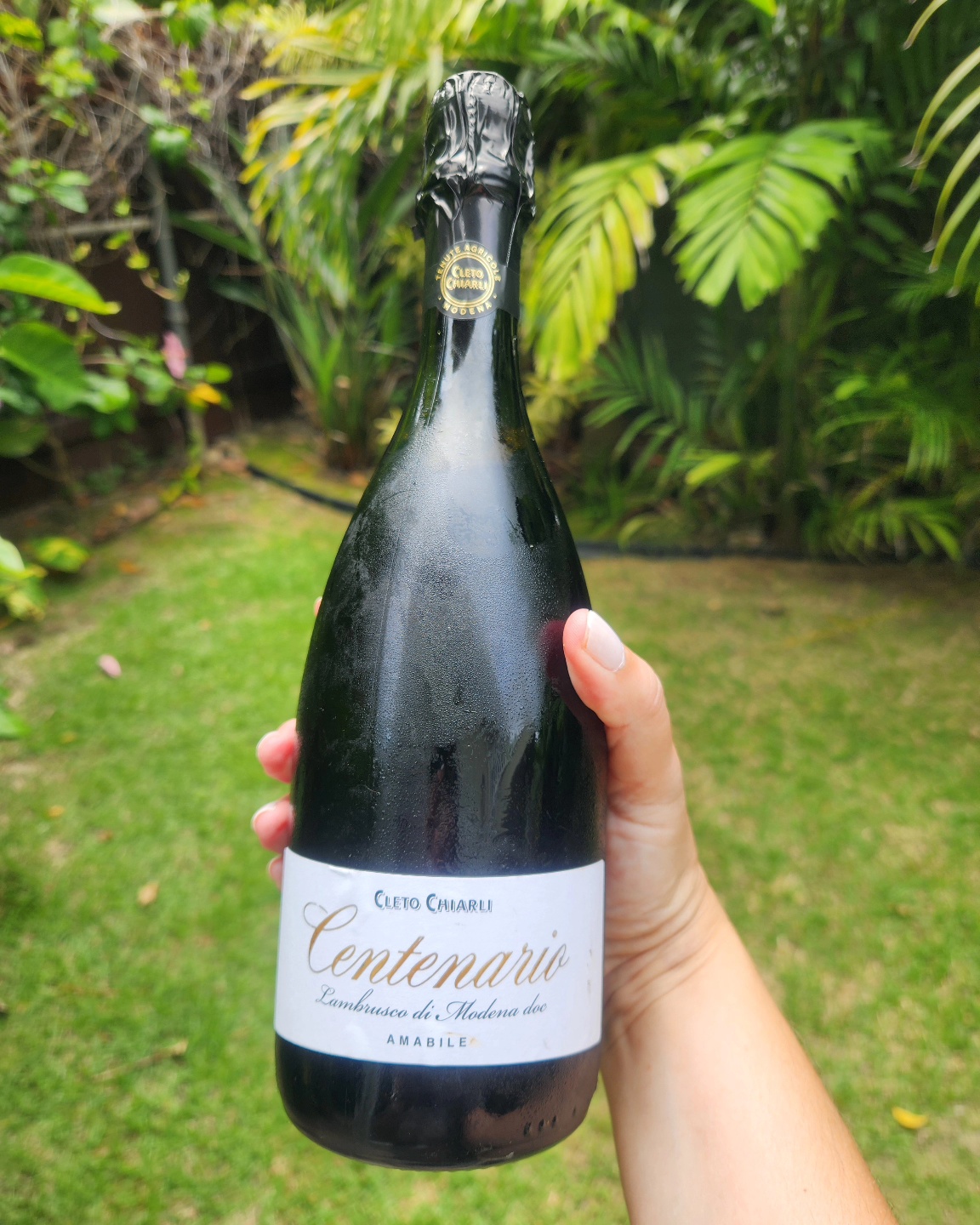
I spoke to the owner and asked for suggestions. At the time they did not have any in stock but he recommended the Cleto Chiarli Lambrusco. In past visits I’ve enjoyed Cleto Chiarli Brut De Noir Rose that Bottleheads sells by the glass. So with this information I figured I’d probably enjoy their Lambrusco as well.


The History Of Cleto Chiarli Lambrusco
The story of the Chiarli family wine is a rich history of innovation and success in the world of sparkling wine production. It begins with Cleto Chiarli, who initially crafted his own Lambrusco wine for his restaurant in the mid-1800s. The wine, made from the local Lambrusco grape, gained popularity among the restaurant’s customers.
Encouraged by this positive reception, Cleto Chiarli, in 1860 founded Cantina Cleto Chiarli, Emilia Romagna’s first wine-producing company. Over time the winery grew to become the largest privately-owned producer of Lambrusco in the region. The Chiarli family’s dedication and expertise were pivotal in elevating it from a local Italian wine to ensuring worldwide recognition and an important part of Italy’s wine exports.
A century after its founding, the Chiarli family further revolutionized Lambrusco production by using the Charmat method. Unlike the traditional method which produced dry, fizzy, and sometimes cloudy wines the Charmat method offered several advantages. It allowed for clear filtration of the wine, increased the pressure in the bottle to achieve full effervescence, and enabled the production of wines with varying levels of residual sugar. The use of this resulted in a new style. It was sweet, red, clear, effervescent and quickly captured international attention.
During its peak, this new style of Lambrusco became immensely popular, particularly in the United States. It was the number-one imported wine in the U.S. from 1976 until 2000. Hitting its peak in 1985 with 11.5 million cases sold. The Chiarli family’s use of the Charmat Method enhanced the appeal of Lambrusco. It also contributed to its enduring status as a well loved sparkling wine globally.


The Details
Lambrusco is made from the Lambrusco grape, which encompasses several related varietals. The most commonly used include Lambrusco Salamino, Lambrusco Grasparossa, and Lambrusco di Sorbara. It comes in a variety of styles. Secco (dry) which has very little residual sugar, making the wine dry. Semisecco (off-dry) which is slightly sweeter than secco. Amabile (semi-sweet), Amabiles are noticeably sweet but balanced. Dolce (sweet) very sweet, often considered dessert wines.
Lambrusco is usually lightly sparkling or (fully sparkling). This characteristic effervescence is a result of natural fermentation, either through the Charmat method or traditional bottle fermentation.
The flavor profile of can vary depending on the specific grape variety and style, but it generally features bright fruit flavors such as strawberry, raspberry, and cherry, often with floral and herbal notes. The dry versions are more structured and tannic, while the sweeter versions are fruitier and softer.
It is versatile when it comes to food pairings. The dry versions pair well with a variety of foods, including cured meats, cheeses, and pasta dishes. The sweeter versions complement desserts and can also balance spicy dishes. You want to enjoy it young and chilled, making it a refreshing choice for warm weather and casual dining.
Drinking Sensei (and friends) Taste Test
I will be the first to admit that tasting wine is not my forte. I include information in these posts that I get from others when it comes to tasting because I often cannot recognize the different flavors. I’m working to improve on that though so this “wine tasting” grasshopper will hopefully become a sensei soon enough!
That being said, I DO know what I like and don’t like. Lambrusco is best served between 55-60 degrees though some say a bit cooler is better. I served it to my friends at the recommended 55-60 degrees and we all decided that we think we’d like it better colder. Into the ice bucket it went to get nice and chilly. Trying it again at the colder temperature we all decided that it’s an excellent alternative to our usual prosecco! Perfect for warm days, light in flavor, the effervescence makes it a refreshing drink. We all decided that we’ll keep it in mind for future brunches. Definitely give it a try when you get a chance. With a price point of $12.99 (in Hawaii), it’s a deal!
Cheers!





Leave a Reply